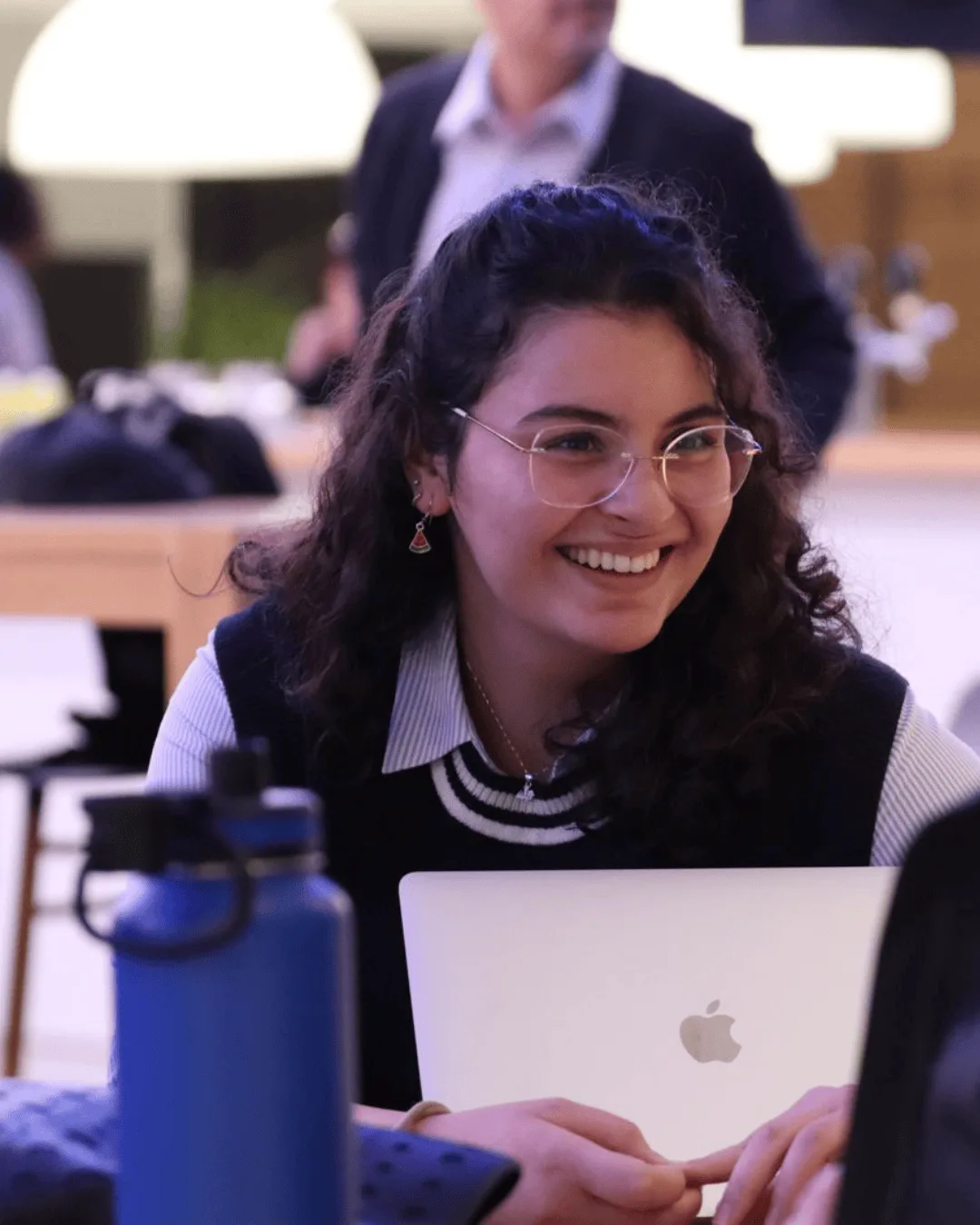
Mai Ababneh, a graduate of Cognitive Science at McGill University, is cultivating embodied self-literacy and empowerment via sex-ed with Muslim youth in Montreal. “Through my conversations with friends, I noticed many cultural taboos and misinformation. I could see that people in my community were having questions about sexual health, relationships, marriage, and intimacy,” Mai shares. “These questions often reflect a lot about how you view yourself, your role in relationships, and your rights. At its core, it is self-consciousness, insecurity, and sometimes fear that hinders people from asking questions that may make them feel more assured and knowledgeable.”
After talking to people in her community and running pilot workshops, Mai realized her community wasn’t interested in sitting in sex-ed classes. Her initiative, in.tasaluh, centers “this idea of inner reconciliation where we focus on discussions of internal feelings like fears or expectations rather than on external things like sex-ed to reach embodied self-literacy.”
in.tasaluh, is a youth-led initiative that creates space for young Muslims to engage in open, compassionate conversations around agency, self-awareness, identity, and sexual health through workshops and facilitated discussions. “The initiative centers the self, encouraging participants to listen to their own voices, reflect on their experiences, and build healthier relationships with themselves and others,” Mai says.
In reflecting on why she applied to the Pathy Fellowship, Mai shares, “I didn’t want to go straight into grad school after undergrad, I wanted to learn, but in a different type of classroom. Towards the completion of my studies, I started to become sick of assignments and mid-terms, but I still had that hunger to learn and to experience new things and continue nurturing my curiosity. The more I read about the Fellowship, the more intrigued I was.”
The Pathy Foundation Fellowship is a unique opportunity for Canadian university students to contribute to meaningful change in their communities while benefiting from generous funding and wrap-around supports. Students are eligible to apply in their final year of studies. “I started reading about the Pathy Fellowship and looking into past Fellow initiatives and it inspired me. The dots started coming together in my head, and I realized I do belong to a community, and the Fellowship would be the perfect opportunity to implement something alongside my community.”
Through the start of the Fellowship year, Mai has led a series of workshops to understand what the community hoped to gain from the initiative. “In the next couple of months, we will be hosting a Q&A in collaboration with a professional with expertise in sexual health so that people can get answers to their questions,” Mai shares. She is also planning programing around Ramadan. “It is my favourite time of year, it’s like a spiritual new year for Muslims because everyone is encouraged to reflect on what the best versions of themselves looks like,” Mai shares. “At this time of year people are more open to asking questions and having discussions about these topics because people are in that reflective mindset.”
In addition to these sessions, Mai is working on a community recording project with different groups in workshops which will be shared in a podcast. “The podcast is different than I thought it would look like, but it seems like the most accessible and community driven format,” Mai shares. Over the next few months, Mai is developing a team of volunteers to support her initiative work. “Through the Fellowship my mindset has changed. I’m more willing to ask for help where previously I would try to figure it out myself,” says Mai.
“Coming into the Fellowship, I was expecting to be changed, to make change, and to experience change. I didn’t know what it would look like or what it meant, I just knew it was going to happen,” says Mai.
Personal growth is a foundational component to the year-long Fellowship. With personal leadership coaching, Fellows will tap into and enhance their capacities as an individual and values-driven changemaker. Fellows are supported in achieving areas of personal growth and development, gaining competencies that will serve them for life. “I’m a lot more aware of my strengths and weaknesses, but I don’t let that stop me now. This year has allowed me to be autonomous and independent while still knowing I’m supported,” Mai shares.
“Initially, I thought success would look like non-profit incorporation or something of that nature,” Mai reflected. “Now, to me, success looks like consistency; I care less about external qualifiers or labels. This year I’ve felt most successful when I was sitting in a discussion circle, and I was not talking, just absorbing the magic in the room of people talking, laughing, sharing, and asking questions that are slowly taking down the stigma brick by brick.”
To learn more about Mai’s Pathy Fellowship initiative, or the Pathy Foundation Fellowship, please visit PathyFellowship.com.